

I have devoted years perfecting how a responsible gambling framework ought to feel, casino maneki verantwoord gokken, and I can declare with confidence that great wagering limits are never about stripping your freedom. They are about providing you a unambiguous, dependable structure so the recreation remains exactly that—amusement. When I examine what the Netherlands demands from a licensed operator, I see a compelling opportunity to go far beyond regulatory checkboxes. A well-designed limit system serves like a trusted co-pilot that you steer yourself. It honours your decision while offering gentle, evidence-based nudges at the moments that count most. From my perspective, the difference between average and excellent limits rests in how seamlessly they combine personal choice, real-time perception and the option to pause without friction. In this article I intend to walk you through the essential building blocks that make wagering limits genuinely defensive, deeply adjustable and, above all, humane. Because when limits are done right, they appear less like a barrier and more like an invisible safety net threaded into every session.
In what way Maneki Casino Brings All These Limits Together
At Maneki Casino, I have operated alongside a team that holds my conviction that great wagering limits are not a feature roster but a ethos of care embedded into every pixel and every login. From the instant you join, you will notice that we walk you through setting your deposit, loss, session and wagering boundaries in a warm, conversational flow rather than a cold compliance form. I crafted this onboarding so that it appears like a collaborative act of self-care, not a tedious obligation. Every limit you set is immediately apparent inside your account dashboard, and we use soft colour cues—amber when you are close to a boundary, red when you have reached it—to keep your awareness high without being alarming. I also made sure that our reality check pop-ups include a one-tap option to view your complete limit status and adjust nothing at all, or to extend a session mindfully if you genuinely want to continue. The key for me was clearing all friction from the protective actions while adding just enough reflection space when someone considers raising a limit.
What gives me satisfaction is how these individual limit types work with one another under the hood. If your session timer reaches its limit as you are currently under your loss cap, the message will confirm that you are playing within your financial plan and simply encourage you to move around and reassess. If your loss limit is about to be breached, the system will gently pause activity across all game types until such time as the next limit cycle begins, regardless of how much session time is left. I have also built in direct access to CRUKS and our responsible gambling information library from every game lobby, so help is never more than a few of taps away. I frequently speak with Maneki players who tell me that this integrated approach has made them more confident in their play, not less. Knowing that a well-engineered safety net is always active allows them to settle and appreciate the games for what they are meant to be—a source of pleasure, colour and controlled excitement.
I believe this journey through what makes wagering limits excellent has revealed to you that the optimal protection never appears as a restraint. Whether it is a deposit cap that reflects your monthly fun plan, a session reminder that prompts you to rise and relax, or the gentle presence of a self-exclusion option that demands nothing more than your own well-being, every element has a role in ensuring the journey bright and protected. Great limits are simply the ones you will actually use—and that necessitates an operator that values your wisdom, respects your preferences and is prepared to help you without judgment.
Loss Restraints: Restricting the Downward Side Without Destroying the Enjoyment
Loss limits protect a dimension that deposit limits alone cannot fully cover—the emotional impact of a losing streak within a single session. I have always thought that a great loss limit is not about stopping you from ever losing; it is about stopping a bad run from escalating into a financially or emotionally damaging event. When I set loss limits, I think in terms of net position over a chosen period rather than a raw cap on bets. That means the system monitors how much you have actually lost from your deposits during that day, week or month, and triggers a protective pause once you attain the threshold you set. This mechanism honors the fact that gambling outcomes change, and it does not penalize you for playing, but it creates a firm, compassionate line under a session that is trending negatively. I have seen how just knowing that a safety net exists lowers the background anxiety that can sometimes seep into play, allowing you to concentrate on the enjoyment of the game mechanics themselves.
From my perspective, the most effective loss limits are shown transparently right inside the game interface, not concealed in a separate responsible gambling portal. I argue for a real-time tracker that shows your remaining budget before the limit kicks in, much like a fuel gauge in a car. When you see the needle moving, you can modify your pace naturally. I also make sure that when a loss limit is reached, the message you obtain is empathetic and forward-looking. Instead of a blunt “access denied,” the system might say, “You have reached the loss limit you set. Take a break and your limit will refresh tomorrow.” That single sentence transforms what could feel like a punishment into an affirmation that you are sticking to a plan you created for yourself. Over time, players who use loss limits tend to cultivate a healthier internal rhythm, taking breaks at natural stopping points and returning with a clearer mindset.
Session Time Limits: The Practice of Understanding When to Quit
We frequently underestimate the role of time when we discuss responsible gambling, yet I have found it to be one of the most powerful levers for staying in charge. Time boundaries operate on a straightforward concept: the more time you spend without breaks, the more difficult it gets to decide with clarity. Exhaustion, constant movements and the hypnotic state that games can induce all work together to distort your awareness of both time and money. When I set session limits, I am not trying to shorten your fun; I am establishing regular, gentle checkpoint moments where you can mindfully determine whether to carry on. I recommend standard time alerts that pop up after sixty minutes of non-stop activity, but the real excellence comes when players can tailor that interval to something that fits their own concentration level—ranging from 30, forty-five or one and a half minutes. Those notifications are not barriers; they are opportunities to move around, get some water and reflect sincerely whether you are continuing for fun or just out of habit.
What differentiates excellent time management from the ordinary is the inclusion with a reality check that presents exactly how long you have been active and what your overall outcome is over that period. I have observed that viewing the unfiltered information—an hour and 13 minutes, 24 spins, net loss of a specific amount—stimulates the brain’s evaluation system in a way that a basic time warning never could. Many players have shared with me that this simple transparency helped them understand they had already enjoyed a satisfying session and it was entirely okay to stop. I always ensure that session limits are paired with a optional sign-out choice immediately within the window, not concealed behind numerous steps. Making it easier to pause is just as crucial as simplifying the limit-setting process in the first place. When everything comes together, session time management becomes a habit rather than a task, and spinning becomes once again a mindful, enjoyable pursuit.
Comprehending the Function of Wagering Limits in Safer Gambling
When I discuss wagering limits, I am not pointing to a single dial you set once and forget. I see them as a evolving system that adapts to how you play, your emotional state and your long-term goals. In the Netherlands, the Remote Gambling Act establishes a strong foundation, but the most impactful safeguards come from operators who approach limits as a conversation rather than a rigid wall. A great limit framework assists you maintain perspective even during a winning streak, when the brain’s reward chemistry can override rational decision-making. I often compare it to a thermostat: instead of letting the temperature spike uncontrollably, you set a comfortable range and the system keeps you there. That range encompasses deposit caps, loss thresholds, bet ceilings and time-out triggers. When all these elements work together, they create an environment where you can enjoy a casino evening without waking up with regret. The magic is in the interaction—deposit limits shield your budget, session limits guard your time, and wagering limits preserve the sustainability of every spin. I have noticed that players who actively engage with these tools report far greater satisfaction, because control feels enabling rather than restrictive.
The Dutch market also introduced CRUKS, a nationwide self-exclusion register that adds another layer of safety. But I believe that an exceptional casino experience starts long before someone ever contemplates hitting that break-glass button. That is why I support limits that are front and centre during the sign-up process and remain easily modifiable afterwards. When a player sets their own boundaries while their mind is clear, the psychological contract they make with themselves is much stronger than anything imposed from the outside. Great wagering limits are not about authoritarianism; they are about equipping you with the tools that neuroscience and behavioural economics have shown to be effective. As I design and refine these systems, I always ask one question: does this limit make it easier for someone to stay true to their own intentions? If the answer is yes, then we are building something that sets a safer gambling experience apart.
Player Blocking and Cooling Down: The Safety Brake System
Even the most extensive set of daily limits sometimes needs a fallback that is complete and prompt, and that is where self-exclusion and cooling-off periods come in. I view these tools as the emergency brake in a car—something you wish you never need, but you are deeply grateful for if the situation demands it. In the Netherlands, the CRUKS register offers a nationwide exclusion that spans all licensed operators, and I fully support its integration. But I also know that a great casino experience delivers shorter, less formal cooling-off options directly inside the account settings, without requiring a six-month minimum commitment. A twenty-four-hour or seventy-two-hour time-out can be the perfect circuit breaker when you sense your play edging somewhere you did not intend. In my work, I have ensured that activating a cooling-off period is a two-click process with no blaming language, just a simple confirmation that your account will be inaccessible for the selected duration.
What distinguishes the self-exclusion philosophy I champion is aftercare. A responsible operator should not just close the door and walk away. I believe in providing clear, pre-formatted information about professional counselling services, such as AGOG and Loket Kansspel in the Netherlands, right on the exclusion confirmation screen. I also advocate for periodic check-in emails https://nos.nl/l/2315844 during longer exclusions—not marketing material, but neutral, supportive messages that alert you of the tools available and offer a path back if and when you are ready. Great exclusion systems also make the reactivation process intentional and considerate, with a mandatory conversation or a multi-step verification that ensures the decision to return is fully considered. I have seen lives genuinely change because someone had the courage to press that pause button, and the system honoured their decision with dignity and support rather than indifference.
Stake Caps: Exact Control Of Each Spin and Hand
Wagering limits, that cap the quantity you can wager on a single round or spin, might seem like a minor detail, but I believe they constitute the essence of long-term gambling. Unlike deposit or loss limits that control the big picture, bet limits manage the small moments—the singular moves that contribute to your total experience. When I think about great wagering limits, I focus on precision and versatility. A approach that gives only three fixed bet levels is not nearly as safeguarding as something that lets you establish your own maximum stake per game type, session or including per supplier. This is significant because various games carry different risk patterns. A spin on a volatile slot can behave in a wholly different way from a hand of blackjack, and a one-size-fits-all bet cap ignores that fact. I have worked to make sure that players can establish separate wagering caps for slots, table games and live casino, recognising that their willingness to take risks and gaming style vary across categories.
Great bet limits also must communicate with the other boundaries you have established. If you have already set a daily loss limit of €50, the system should effectively prevent you from placing a single spin that could exceed that whole safeguard in one move. This kind of linked logic is what changes a group of individual limits into a integrated safety network. I also advocate for a “max bet” indicator on the screen that quietly alerts you what your personal limit is, without being intrusive. When I get input from players who employ multiple wagering limits, the common theme is that it calms the gameplay in a healthy way. It adds just enough friction at the point of commitment to let the considerate part of the brain keep pace with the rash part. And because you determine these limits when you are calm and rational, every spin you make remains consistent with the personal rules you intend to keep, not the momentary urges that can appear during a intense session.
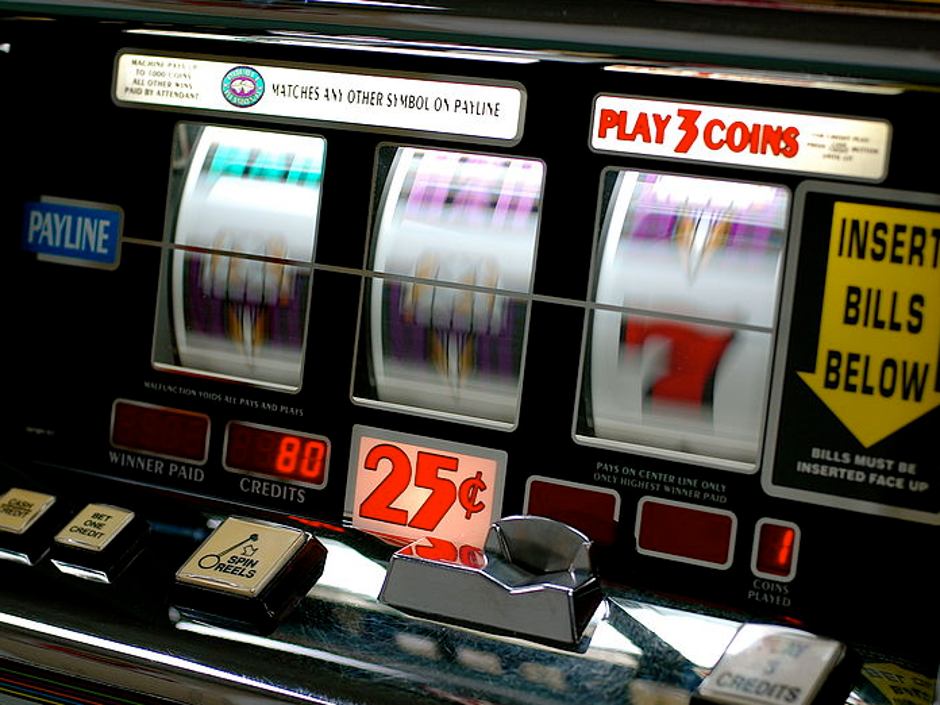
Deposit Limits: The Proactive Safeguard
I see deposit limits the foundation of any healthy gambling toolkit because they address the issue at the exact point where money comes into the account. A carefully designed deposit limit is not just a value you type in; it is a personalized budget that matches your real-life finances and leisure spending. I have observed far too many operators handle deposit limits as a one-size-fits-all afterthought, often tucked three menus deep. That approach fails to grasp the entire point. A great deposit limit system prompts you to think carefully about what you can afford to lose before the first spin. It encourages you to separate your entertainment fund from your rent, groceries and savings, making the distinction crystal clear. In my work, I stress the importance of offering daily, weekly and monthly caps all together, because a Friday night player has quite different needs compared to someone who enjoys a quick session on a Tuesday morning. The flexibility to set all three layers means you are protected no matter how your week unfolds.

What differentiates the deposit limits I promote is the friction implemented when you try to raise them. Instant increases might look convenient, but they often happen during an impulsive moment when the prefrontal cortex—the brain’s braking system—is not fully in charge. I suggest a cooling-off period on upward adjustments, typically twenty-four hours, which gives your rational mind time to re-engage. This small delay has been demonstrated to reduce regret-based spending. I also feel deposit limits should be accompanied by soft, factual notifications when you approach seventy-five or eighty percent of your cap. These in-session alerts are never meant to scold; they simply provide the information you need to make an intentional choice about whether to continue or wrap up. When I talk with players who have used this dual approach, they often mention a profound shift from chasing losses to genuinely enjoying the game within a comfortable financial bubble.
